Category: Physics
-

How to Draw a Free Body Diagram Without Missing a Force
A free-body diagram can look almost too simple: a box or dot surrounded by arrows. Yet one missing or misdirected arrow can ruin every equation that follows. If you want to learn how to draw a free body diagram correctly, the key is not artistic skill. It is learning to isolate one system and show…
-

Work Energy Theorem Problems With Solutions: From Braking Cars to Variable Forces
A 1,000 kg car moving at highway speed can carry hundreds of thousands of joules of kinetic energy. The surprising part is that you can often find its stopping distance without calculating time or acceleration at all. That is why work energy theorem problems with solutions matter: they turn many force-and-motion questions into a direct…
-
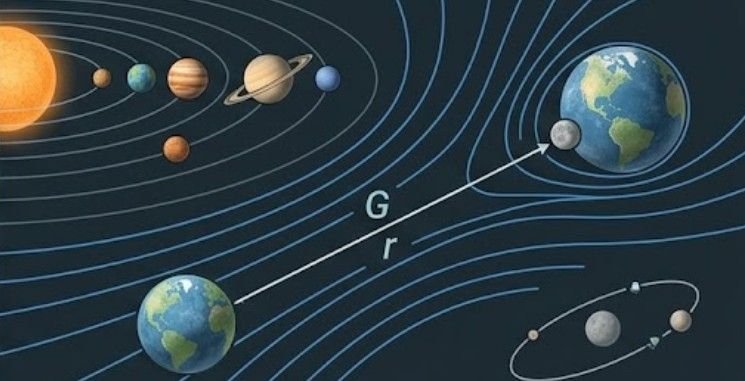
What Are the 12 Basic Laws of Physics? The Rules Behind Motion, Heat, Electricity, and Light
Physics does not actually have an official master list labeled “the 12 laws.” Different textbooks emphasize different principles depending on whether the subject is mechanics, thermodynamics, electricity, or quantum physics. Still, if someone asks what are the 12 basic laws of physics, a useful answer is a set of foundational laws explaining motion, gravity, energy,…
-

Bernoulli Equation Problems Step by Step: A Practical Solving Method
A narrowing pipe does not lower pressure “by magic.” The change is an energy trade: pressure energy can become kinetic energy as fluid speeds up, while elevation can also gain or surrender energy. That is the key to solving bernoulli equation problems step by step without getting lost in symbols. For steady, incompressible flow with…
-
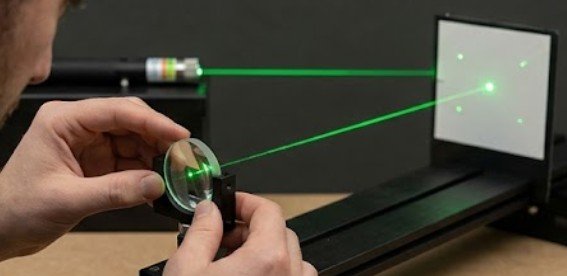
How to Draw Ray Diagrams for Lenses Without Guesswork
A ray diagram is not an artistic sketch; it is a prediction tool. With only two carefully chosen rays, you can locate an image, decide whether it is real or virtual, and determine whether it is upright, inverted, enlarged, or reduced. That is the key to learning how to draw ray diagrams for lenses: accuracy…
-
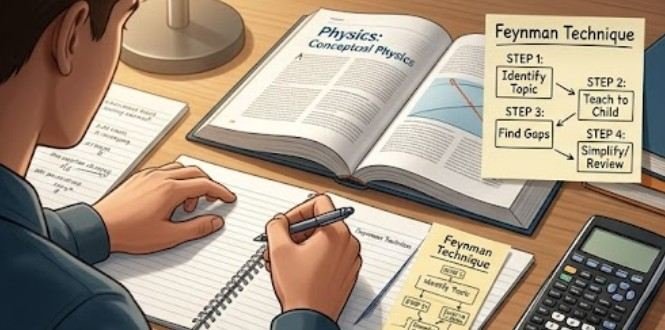
Good Tips for Studying for a Physics Exam That Actually Improve Problem-Solving
The most productive way to prepare for a physics exam is also the one students often avoid: close the notes and start solving problems. Physics exams rarely reward recognition alone. A formula may look familiar on a study sheet, yet the real test is whether you can identify the relevant principle, translate a situation into…
-

Pressure at Depth Problems Physics: A Practical Way to Solve Them
Go only about 33 feet below the ocean surface and the surrounding pressure rises by roughly one additional atmosphere. NOAA’s ocean pressure explainer uses that rule of thumb to explain why divers can feel pressure changes after descending only a short distance. Most pressure at depth problems physics questions become straightforward once you decide whether…
-
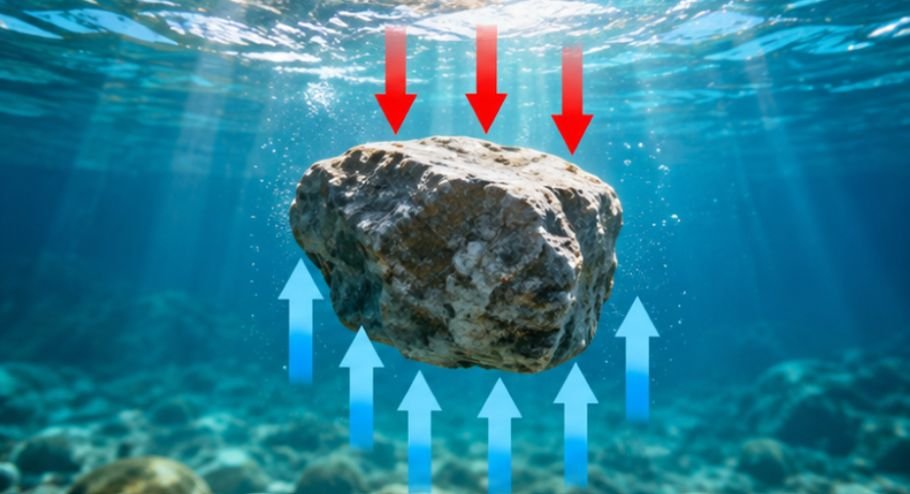
How to Calculate Buoyant Force With Density Without Guesswork
A steel ship can weigh thousands of tons and still float, while a small solid steel block sinks. The difference is not the metal itself. It is the amount of fluid displaced. That is the quickest way to understand how to calculate buoyant force with density. The core equation is: Fb = ρVg The buoyant…
-

Pendulum Period Problems With Solutions: A Smarter Way to Solve Them
A pendulum can weigh 50 grams or 50 kilograms and, under the simple-pendulum model, its period stays the same. That surprises many physics students because mass matters in so many other motion problems. For pendulums, the key variables are length and gravitational acceleration. That makes pendulum period problems with solutions easier than they first appear.…
-
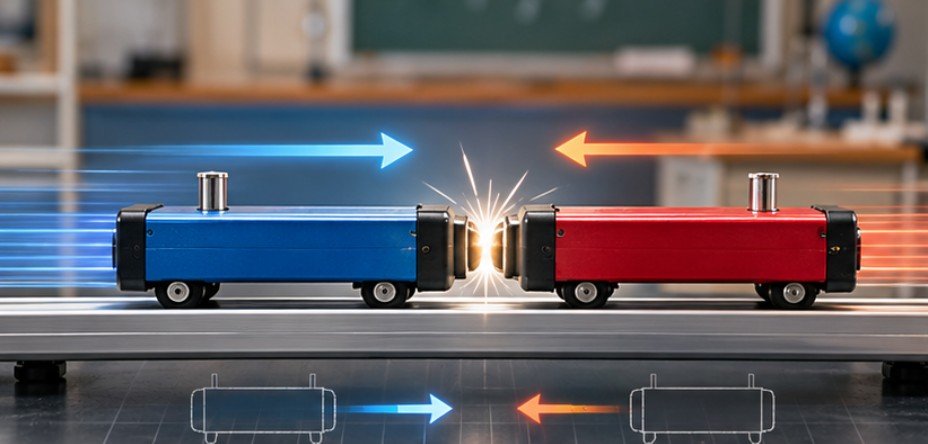
Conservation of Momentum Problems With Collisions: A Practical Way to Solve Them
Two objects can crash, bend, heat up, make noise, and lose a large share of their kinetic energy while the total momentum of the system remains unchanged. That is the key idea behind conservation of momentum problems with collisions: the motion may look chaotic, but the momentum accounting can stay simple. For an isolated system,…