Mindblown: a blog about philosophy.
-

How to Draw a Free Body Diagram Without Missing a Force
A free-body diagram can look almost too simple: a box or dot surrounded by arrows. Yet one missing or misdirected arrow can ruin every equation that follows. If you want to learn how to draw a free body diagram correctly, the key is not artistic skill. It is learning to isolate one system and show…
-

Work Energy Theorem Problems With Solutions: From Braking Cars to Variable Forces
A 1,000 kg car moving at highway speed can carry hundreds of thousands of joules of kinetic energy. The surprising part is that you can often find its stopping distance without calculating time or acceleration at all. That is why work energy theorem problems with solutions matter: they turn many force-and-motion questions into a direct…
-
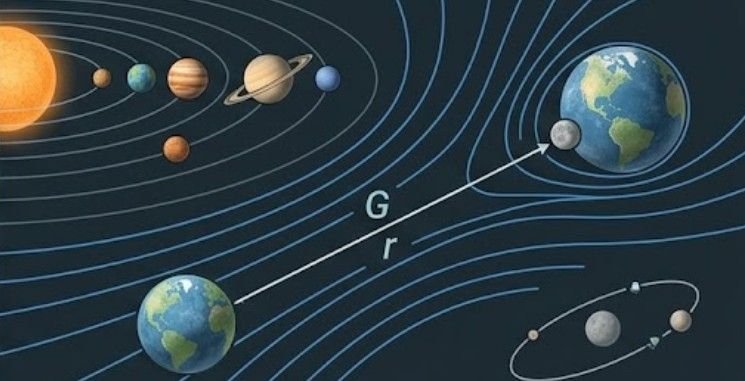
What Are the 12 Basic Laws of Physics? The Rules Behind Motion, Heat, Electricity, and Light
Physics does not actually have an official master list labeled “the 12 laws.” Different textbooks emphasize different principles depending on whether the subject is mechanics, thermodynamics, electricity, or quantum physics. Still, if someone asks what are the 12 basic laws of physics, a useful answer is a set of foundational laws explaining motion, gravity, energy,…
-

Bernoulli Equation Problems Step by Step: A Practical Solving Method
A narrowing pipe does not lower pressure “by magic.” The change is an energy trade: pressure energy can become kinetic energy as fluid speeds up, while elevation can also gain or surrender energy. That is the key to solving bernoulli equation problems step by step without getting lost in symbols. For steady, incompressible flow with…
-
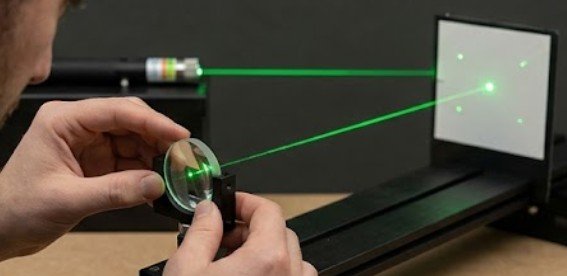
How to Draw Ray Diagrams for Lenses Without Guesswork
A ray diagram is not an artistic sketch; it is a prediction tool. With only two carefully chosen rays, you can locate an image, decide whether it is real or virtual, and determine whether it is upright, inverted, enlarged, or reduced. That is the key to learning how to draw ray diagrams for lenses: accuracy…
-

Good Tips for Studying for a Physics Exam That Actually Improve Problem-Solving
The most productive way to prepare for a physics exam is also the one students often avoid: close the notes and start solving problems. Physics exams rarely reward recognition alone. A formula may look familiar on a study sheet, yet the real test is whether you can identify the relevant principle, translate a situation into…
-

Math Exam Revision Timetable Strategy: A 14-Day Plan
A revision calendar can look perfect and still fail on exam day. I learned this when I spent equal time on every math topic, even though a few types of problems caused most of my errors. My math exam revision timetable strategy now starts with those errors. It gives weak topics more practice, brings older…
-

Understanding Limits and Continuity Clearly: A Simple Test
A graph can approach a point without ever touching it. That detail confused me when I first studied calculus: I kept treating a function’s value and its limit as the same answer. For understanding limits and continuity clearly, I now ask two separate questions. Where is the function heading, and what happens at the point…
-

Why Does Reaction Rate Change With Temperature in Chemical Reactions?
I first noticed how strongly temperature affects chemistry when comparing reactions that seemed identical except for heat. A mixture could sit quietly when cool, then react much faster after warming. That made me curious because the particles had not changed into different substances. Something about their motion and energy had changed. I also found that…
-

Binomial Theorem Expansion Solved Examples Made Easy
If you can expand (x + 2)² but get stuck at (x + 2)⁴, repeated multiplication is probably slowing you down. I use the binomial theorem to build each term in order, then run a short check for mistakes. These binomial theorem expansion solved examples show both steps, with equations you can copy into Google…
Got any book recommendations?