Mindblown: a blog about philosophy.
-

Pressure at Depth Problems Physics: A Practical Way to Solve Them
Go only about 33 feet below the ocean surface and the surrounding pressure rises by roughly one additional atmosphere. NOAA’s ocean pressure explainer uses that rule of thumb to explain why divers can feel pressure changes after descending only a short distance. Most pressure at depth problems physics questions become straightforward once you decide whether…
-

Sequence and Series Formulas Revision Guide for Exams
A page of formulas is useful only if you can tell which one fits the question. I start revision by checking how the terms change: do they have a constant difference, a constant ratio, or both? This sequence and series formulas revision guide puts that decision before the calculations. All equations below use plain text,…
-

How Does a Catalyst Affect Reaction Mechanisms and Reaction Rates?
I used to think of a catalyst as something that simply made a reaction happen faster. That explanation works at first, but when I looked more closely at reaction mechanisms, I realized the better question is what the catalyst actually changes along the way. The answer sits in the sequence of molecular steps between reactants…
-
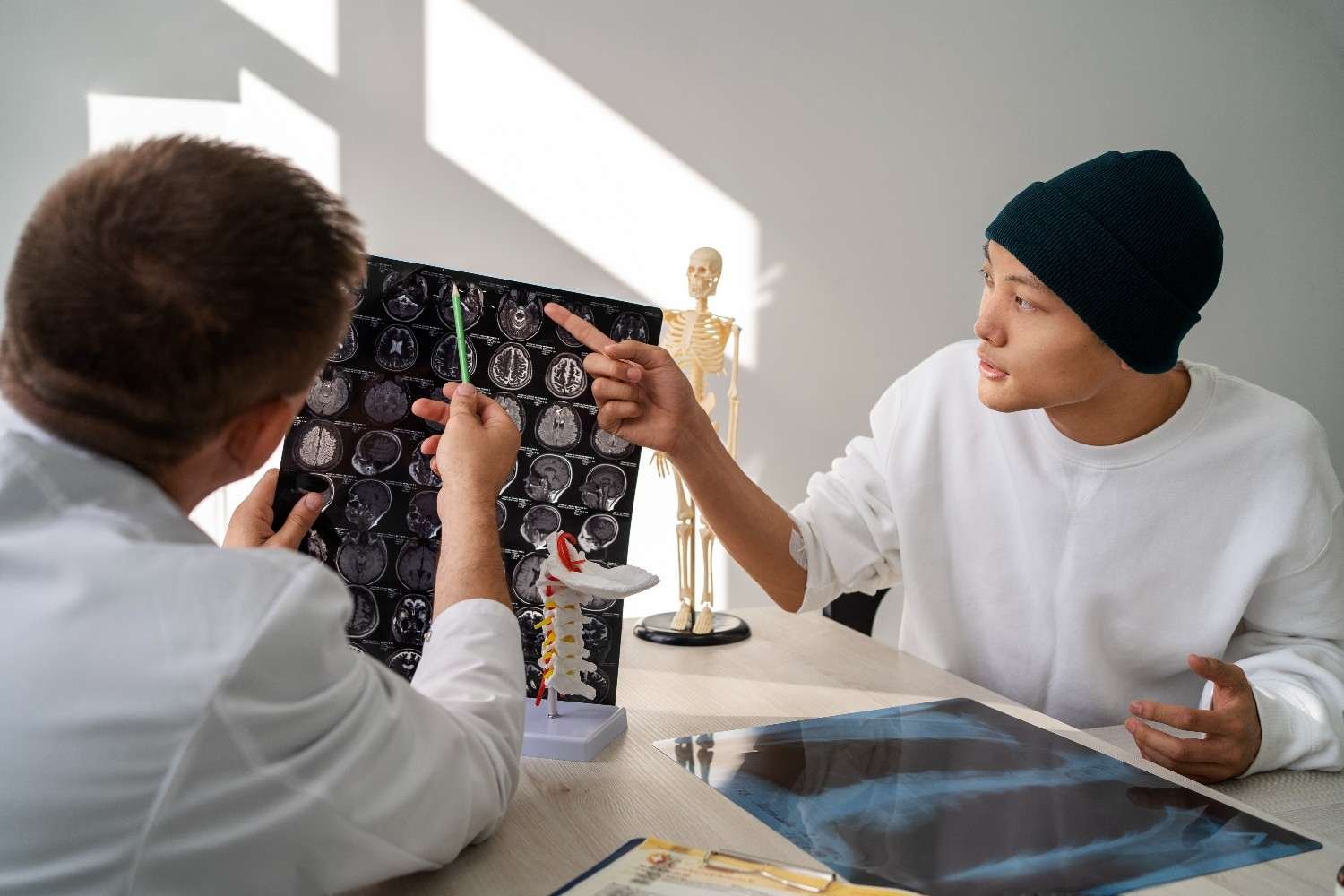
Memory Techniques for Anatomy and Physiology Students That Stick
If I try to learn A&P by rereading the same chapter, I may recognize the material without being able to recall it on an exam. That is why I prefer memory techniques for anatomy and physiology students that make me retrieve, visualize, explain, and connect information. For US college students in nursing, allied health, pre-med,…
-

How to Use Practice Tests to Prepare for Exams Without Wasting Your Time
I used to think a practice test was useful only if I scored well. A low mark felt discouraging, so I would check the answers, promise to study harder, and move on. Eventually, I realized the score was only the starting point. The questions I missed showed me what to study next, while the questions…
-
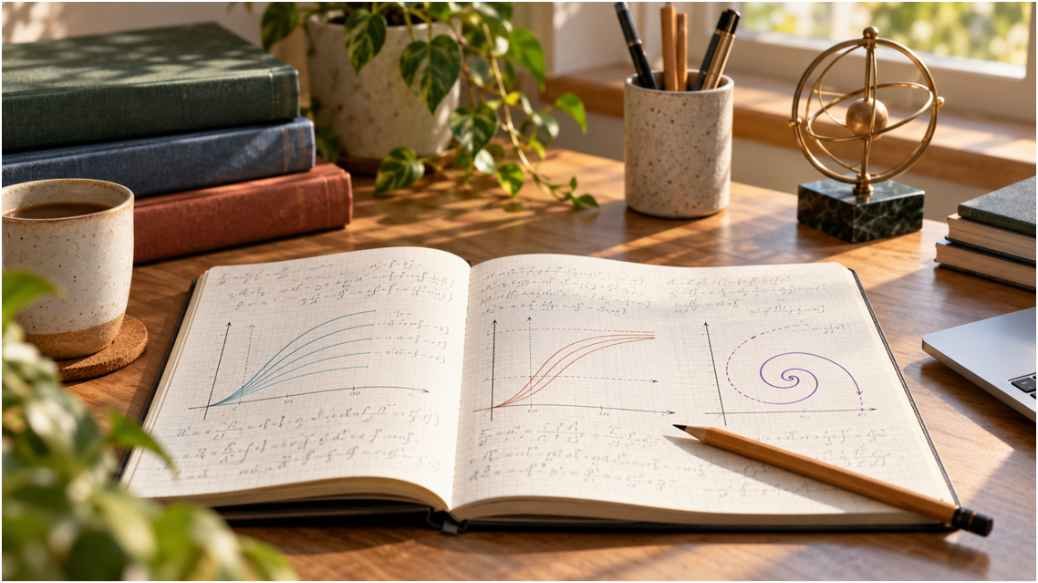
Solved Examples of Differential Equations: Three Methods That Actually Make Sense
A differential equation gives you a derivative and asks you to find the function behind it. When I first worked through these problems, integration was rarely the hardest part. Choosing the right method was. These solved examples of differential equations show three common first-order methods: separation of variables, an integrating factor, and substitution with y…
-

Probability and Statistics Formulas Explained Simply
A formula is only helpful when you know which question it answers. Are you finding the chance of an event, describing data you collected, or estimating something about a larger group? That choice matters more than memorizing symbols. I find probability and statistics formulas explained most clearly when I use one example across all three…
-

Understanding Molarity and Dilution Calculations With Examples
I first understood molarity as more than a formula when I had to work backward from a measured mass to the concentration of a solution. The arithmetic was simple, but units mattered. A missed conversion to liters could completely change the answer. I also found dilution problems easier once I stopped treating M₁V₁ = M₂V₂…
-

How to Stay Focused While Studying for Exams When Your Mind Keeps Wandering
I have sat down with good intentions, opened my notes, and somehow spent twenty minutes deciding what to study first. When an exam is close, that lost time feels especially frustrating. What helps me is giving each session a small purpose: choose one task, make distractions harder to reach, and check what I can remember…
-

The Rise of AI-Assisted Chemistry Problem Solving in Education
I started noticing how often AI appeared in chemistry study sessions when a difficult equation no longer meant waiting for office hours or searching through several textbook pages. A student could ask for a breakdown of a calculation, request another explanation, or compare two approaches within minutes. That convenience changed the rhythm of studying, but…
Got any book recommendations?