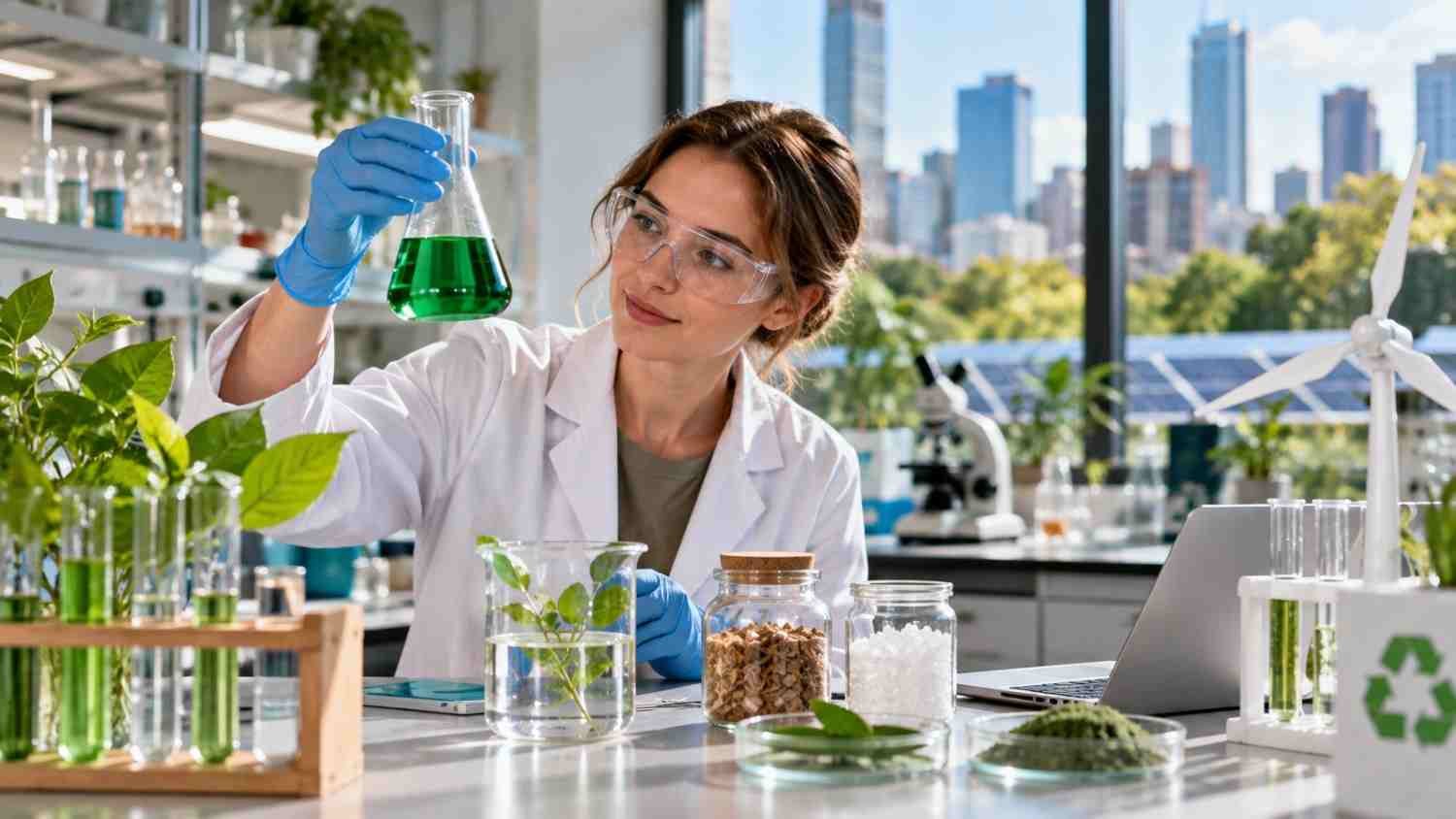
I started noticing green chemistry when familiar ideas such as waste, solvents, and energy began to look less like separate laboratory concerns and more like design choices. A reaction can produce the desired compound and still create waste, require hazardous materials, or consume more energy than needed. That changed how I thought about what makes a process successful.
I also found that green chemistry concepts become easier to understand when connected to decisions chemists actually make. Instead of treating sustainability as something added after a product is manufactured, the approach asks a useful question at the beginning: can the product and process work effectively while creating fewer hazards and using fewer resources?
What Green Chemistry Actually Means
Green chemistry is the design of chemical products and processes that reduce or eliminate the use and generation of hazardous substances. The idea is prevention. Pollution control often deals with waste after it is created, while green chemistry looks upstream at the reaction, materials, conditions, and final product.
That distinction matters because cleaner design can prevent problems before treatment is needed. Using fewer raw materials, avoiding unnecessary reaction steps, or choosing a safer solvent can reduce waste while simplifying a process.
The Core Green Chemistry Concepts
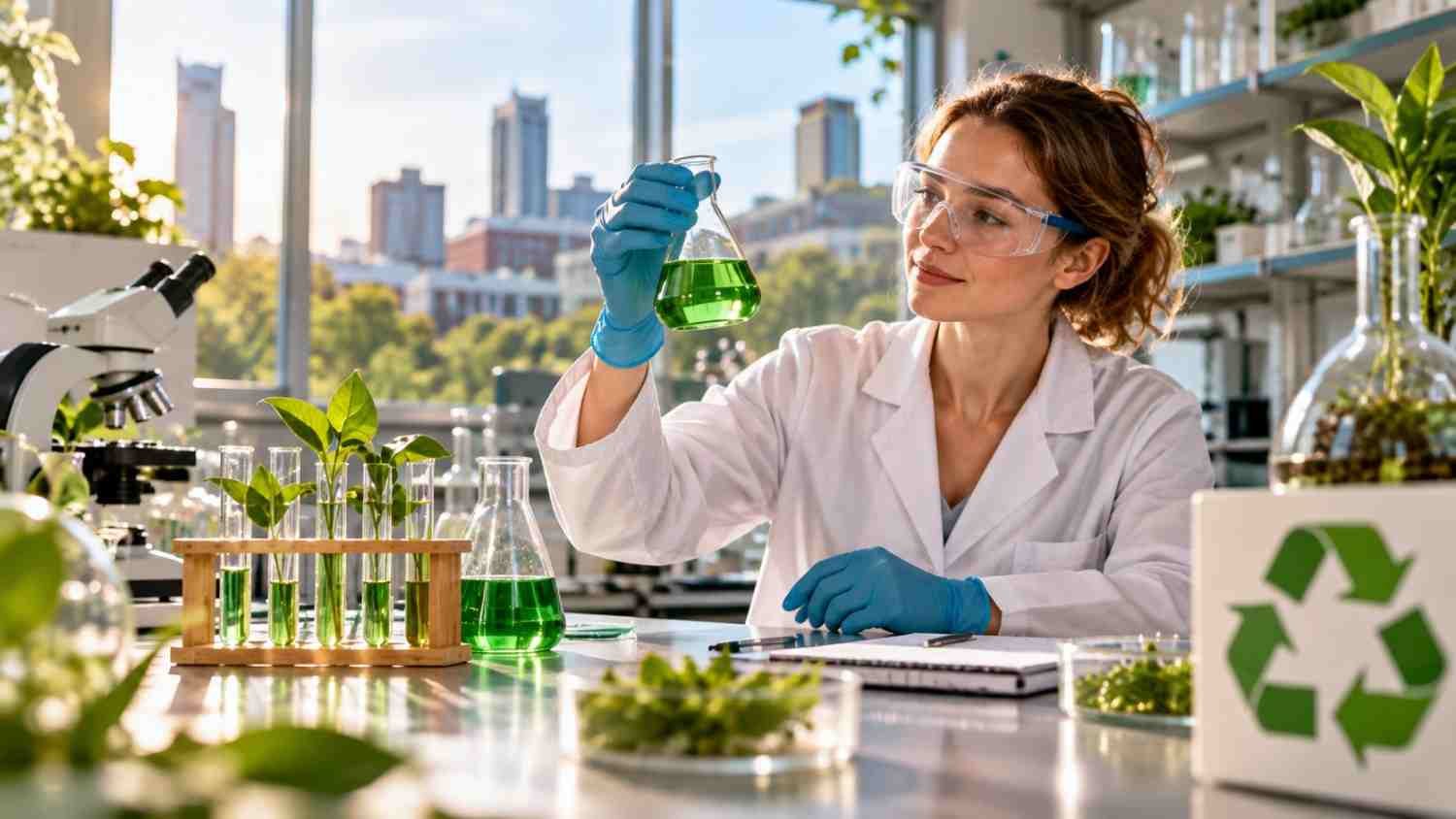
The 12 principles of green chemistry provide a framework for these decisions. They are closely connected, so one improvement can benefit several areas.
Waste prevention comes first because avoiding waste is preferable to treating it later. Atom economy asks how much starting material becomes part of the desired product. A high-yield reaction is not automatically green if large amounts of reactants become byproducts.
Safety operates at two levels. Less hazardous synthesis focuses on reducing toxicity in substances used and produced during manufacturing, while safer chemical design considers whether the final product can perform its intended function with less harmfulness.
Solvent selection is another consideration. Reducing solvent use or choosing safer alternatives can lower environmental and occupational risks. Energy efficiency matters too. Reactions that work under milder temperatures and pressures can reduce energy demand when performance remains satisfactory.
Other principles broaden the picture. Renewable feedstocks can reduce dependence on finite resources, while avoiding unnecessary derivatives can eliminate extra reagents and waste. Catalysis can improve selectivity and efficiency.
Design for degradation considers what happens after a chemical has served its purpose. Ideally, products should break down into substances that do not persist unnecessarily. Real-time analysis can identify problems during processing. Accident prevention focuses on materials and conditions that reduce risks such as fires, explosions, and releases.
Together, these principles turn sustainability into a chemistry problem that can be evaluated before a process is finalized.
How Green Chemistry Supports Sustainable Chemistry
Green chemistry and sustainable chemistry overlap, but they are not identical. Green chemistry focuses on molecular and process-level design, while sustainable chemistry can involve broader questions about resources, economics, social impacts, and life cycles.
The connection becomes clear through resource conservation. A process that uses renewable feedstocks, produces less waste, and requires less energy can reduce pressure on finite resources. However, renewable does not automatically mean better. A feedstock still needs evaluation for processing, toxicity, and environmental impact.
Green chemistry also supports circular economy thinking. Products designed for safer recovery, recycling, reuse, or degradation can help keep useful materials in circulation. Circular systems become harder to maintain when materials contain hazardous substances or are difficult to separate.
Pollution prevention is another direct connection. Instead of depending primarily on wastewater treatment, emissions controls, or disposal, green chemistry attempts to reduce problematic substances at the source.
Where These Concepts Appear in Practice
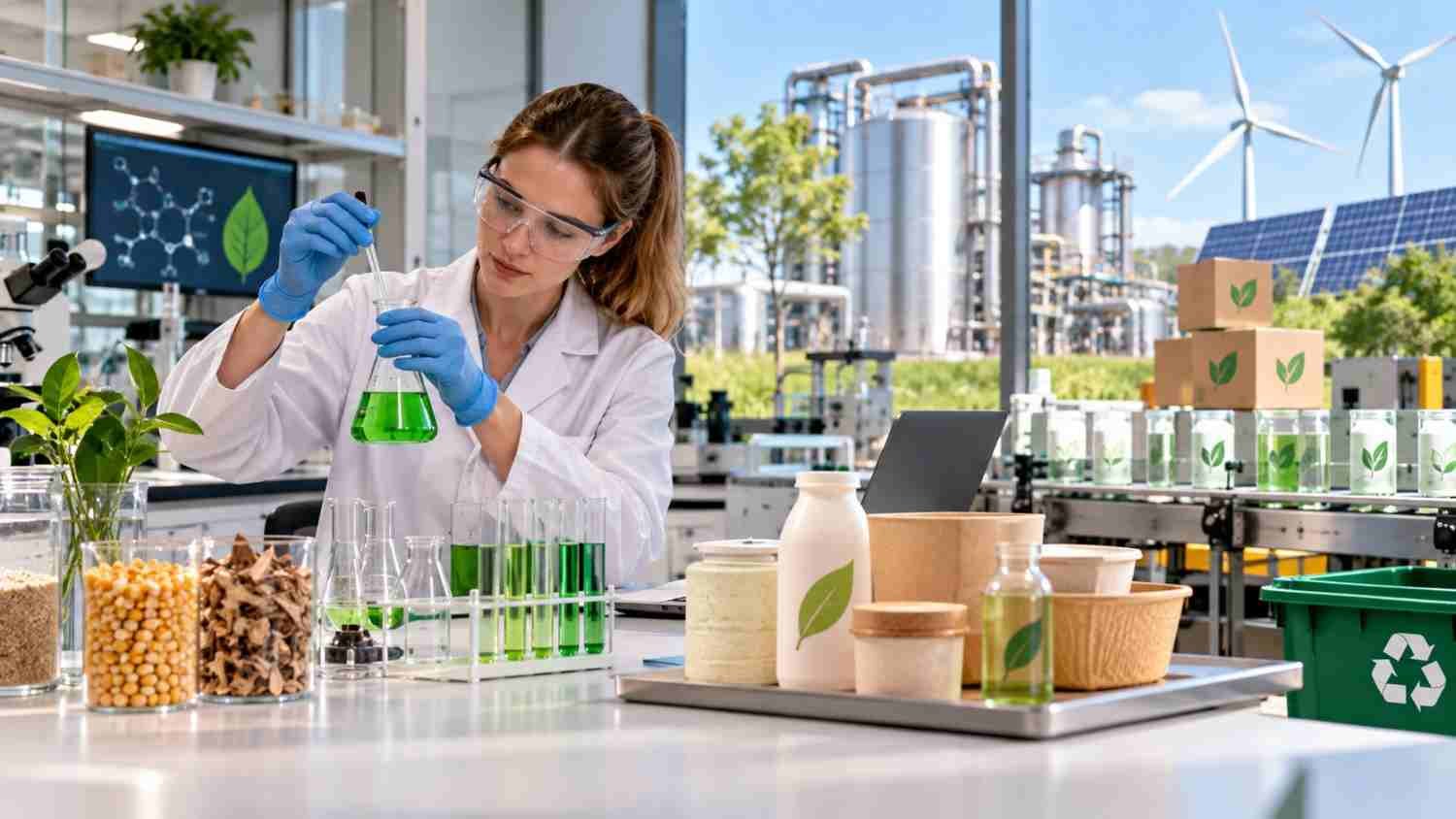
The principles can influence pharmaceutical manufacturing, polymers, materials science, industrial production, and teaching laboratories.
In pharmaceutical chemistry, reducing reaction steps or improving atom economy can lower material requirements. Catalysts and efficient reaction conditions may also reduce solvent use and energy consumption. In materials science, researchers can consider whether a material can perform well without persistent or hazardous components.
Laboratories provide smaller-scale examples. Choosing a safer solvent, using microscale quantities, and planning experiments to minimize waste can put green chemistry into practice.
Green Chemistry and Modern Chemistry Skills
Green chemistry changes how chemical problems are evaluated. A student may balance an equation or calculate theoretical yield, but deeper analysis can ask what happens to remaining atoms, which reagents create waste, how hazardous substances are, and how much energy the reaction requires.
That reasoning works alongside AI-assisted chemistry problem solving. AI tools can help generate explanations, compare reaction approaches, or organize calculations, but their output still needs chemical scrutiny. A plausible-looking answer can contain an incorrect equation, impossible reaction condition, missing byproduct, or unsafe recommendation.
Verification therefore becomes part of responsible chemistry practice. When reviewing how to verify AI-generated chemistry answers, students can check stoichiometry, equations, units, reaction feasibility, conditions, safety information, and source reliability. Green chemistry adds another layer: does the proposed solution reduce waste, hazards, unnecessary materials, and energy demand?
This encourages students to judge solutions by more than whether they produce the expected compound.
FAQs: Green Chemistry Concepts and Their Role in Sustainable Chemistry
1. What is the main goal of green chemistry?
Its main goal is to design chemical products and processes that prevent or minimize hazardous substances, waste, and environmental harm from the start rather than relying mainly on cleanup afterward.
2. Why is atom economy important?
Atom economy measures how effectively reactant atoms are incorporated into the desired product. Higher atom economy can mean fewer unwanted byproducts and more efficient use of raw materials.
3. Is green chemistry the same as sustainable chemistry?
No. Green chemistry focuses primarily on designing safer, more resource-efficient chemicals and processes. Sustainable chemistry can address wider environmental, economic, and social considerations across a product’s life cycle.
4. Does green chemistry only apply to industry?
No. The principles can be used in research, education, laboratories, pharmaceuticals, materials development, and manufacturing.
Why Better Chemistry Starts With Better Design
The most useful lesson from green chemistry is that environmental responsibility does not have to sit outside the chemistry itself. Decisions about reactants, solvents, catalysts, energy, toxicity, and product design can shape the environmental and safety profile of a process long before waste reaches a treatment facility.
That makes green chemistry a practical way to think carefully about what a successful reaction really means. The goal is not simply to make chemistry work, but to make it work with fewer unnecessary costs to people, resources, and the environment.
Leave a Reply