When I first encountered trigonometric identities in calculus, my immediate reaction was sheer panic. Memorizing dozens of equations that looked like alphabet soup felt impossible until I realized something crucial: they are just mathematical synonyms.
Just as “enormous” means the exact same thing as “very large,” trigonometric identities are equations true for every possible angle that allow us to swap messy expressions for cleaner ones.
Mastering a trigonometric identities simplified explanation transforms complex problem-solving into a straightforward game of substitution. Whether you are dealing with advanced calculus or structural engineering, having a solid grasp of these relationships is non-negotiable.
The Big Three Ratio Identities
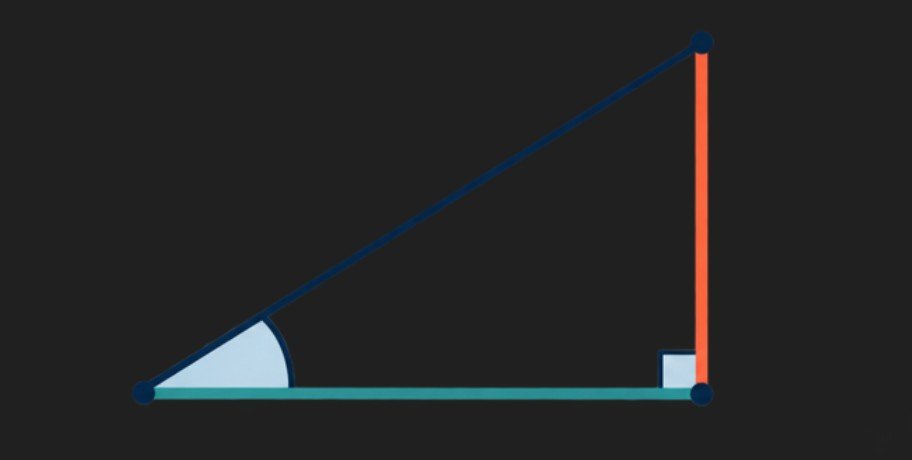
Everything in trigonometry traces back to three fundamental functions: Sine ($\sin$), Cosine ($\cos$), and Tangent ($\tan$). Picture a standard right-angled triangle where $\sin(\theta) = \frac{\text{Opposite}}{\text{Hypotenuse}}$, $\cos(\theta) = \frac{\text{Adjacent}}{\text{Hypotenuse}}$, and $\tan(\theta) = \frac{\text{Opposite}}{\text{Adjacent}}$.
Because of how these fractional ratios divide out, we get our first primary relationship.
| Function | Definition / Ratio Identity | Description |
| Tangent | $\tan(\theta) = \frac{\sin(\theta)}{\cos(\theta)}$ | Expresses tangent as the ratio of sine to cosine. |
| Cotangent | $\cot(\theta) = \frac{\cos(\theta)}{\sin(\theta)}$ | The reciprocal ratio linking cosine and sine. |
The Reciprocal Identities
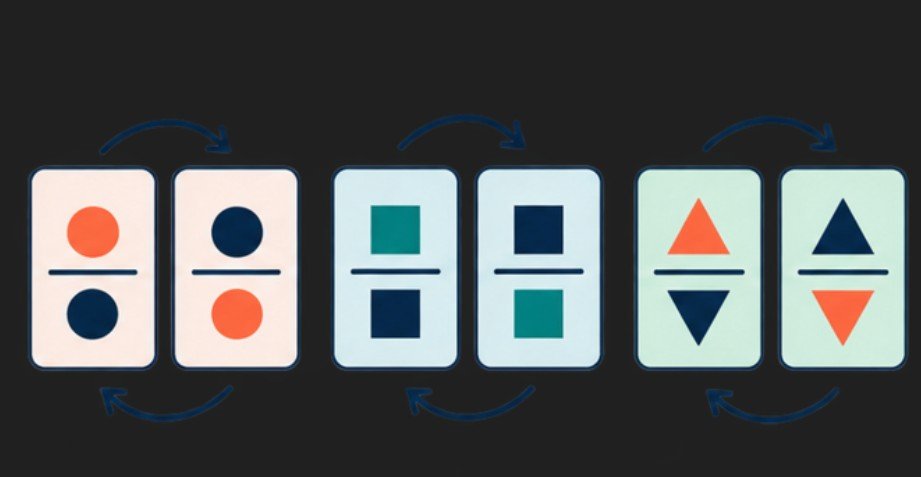
The remaining three trig functions—Cosecant ($\csc$), Secant ($\sec$), and Cotangent ($\cot$)—are simply the upside-down, or reciprocal, versions of the primary triad. Think of them as mirror images that make handling inverse proportions seamless.
| Function | Flipped Version Of… | Identity Formula |
| Cosecant ($\csc$) | Sine ($\sin$) | $\csc(\theta) = \frac{1}{\sin(\theta)}$ |
| Secant ($\sec$) | Cosine ($\cos$) | $\sec(\theta) = \frac{1}{\cos(\theta)}$ |
| Cotangent ($\cot$) | Tangent ($\tan$) | $\cot(\theta) = \frac{1}{\tan(\theta)} = \frac{\cos(\theta)}{\sin(\theta)}$ |
The Pythagorean Identities
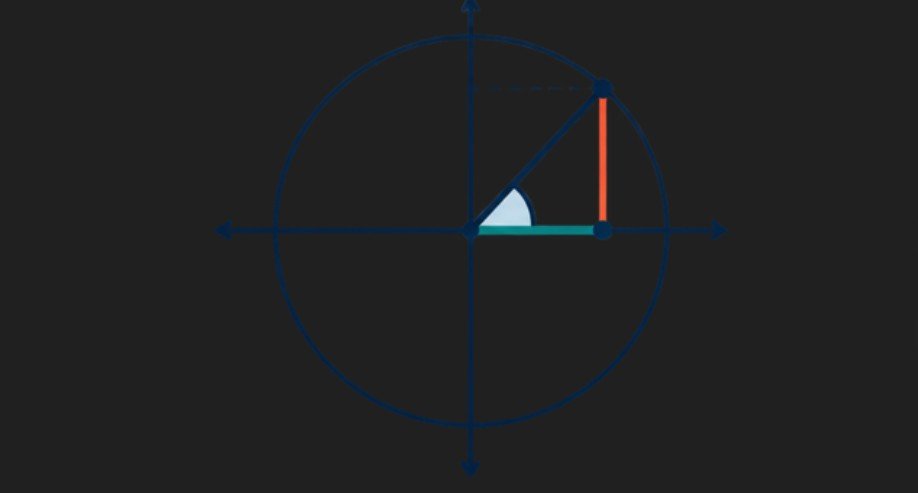
These are the absolute superstars of trigonometry. They stem directly from the classic Pythagorean theorem ($a^2 + b^2 = c^2$) applied to a unit circle where the radius equals $1$. Because the radius is fixed at one unit, the horizontal leg becomes $\cos(\theta)$ and the vertical leg becomes $\sin(\theta)$.
For a deeper parallel in mathematical operations, you might learn matrix multiplication rules helpful when evaluating systems.
| Identity Name | Formula | Practical Use Case |
| Primary Pythagorean | $\sin^2(\theta) + \cos^2(\theta) = 1$ | Instantly collapses complex squares down to $1$. |
| Tangent-Secant | $\tan^2(\theta) + 1 = \sec^2(\theta)$ | Derived by dividing the primary identity by $\cos^2(\theta)$. |
| Cotangent-Cosecant | $1 + \cot^2(\theta) = \csc^2(\theta)$ | Derived by dividing the primary identity by $\sin^2(\theta)$. |
When streamlining complex calculus expressions—such as those often encountered during integration by parts computations—recognizing these structural shortcuts saves valuable time.
Frequently Asked Questions
1. What is a trigonometric identity?
An equation containing trig functions that remains true for every valid angle.
2. How do I memorize the Pythagorean identities?
Memorize $\sin^2(\theta) + \cos^2(\theta) = 1$ and divide everything by $\cos^2(\theta)$ or $\sin^2(\theta)$ to find the rest.
3. When should I substitute reciprocal identities?
Whenever you need to express csc, sec, or cot in terms of basic sines and cosines.
4. Why do we use these identities?
To simplify messy algebraic expressions into manageable terms.
Crunching the Numbers Out
Stop treating trig identities like dry textbook rules and start viewing them as cheat codes for algebraic survival. Memorize the unit circle foundation, keep your reciprocal table handy, and watch your math workflow instantly speed up.
Leave a Reply