
A 40- or 50-page college textbook chapter can feel overwhelming when I approach it like a normal reading assignment. I used to think the solution was simply to read more carefully, highlight important sentences, and go back over anything I forgot. In reality, that approach often took hours without producing strong recall.
The most effective study techniques for long textbook chapters rely on active processing rather than passive rereading. I get better results when I preview the material, divide it into manageable sections, ask questions before reading, retrieve ideas from memory, and review difficult material over several sessions.
For US college students balancing classes, assignments, work, and exams, this approach can make dense academic reading far more manageable.
How Should I Start Studying a Long Textbook Chapter?
I never begin a long chapter by immediately reading page one.
Instead, I spend about five minutes surveying the chapter. I check the introduction, learning objectives, section headings, subheadings, bold terms, diagrams, charts, chapter summary, and review questions.
I also use a form of reverse reading. Before tackling the chapter itself, I look at the summary and end-of-chapter questions. This gives me an early idea of what the author considers important and helps me recognize major concepts when they appear later.
This preview creates a mental roadmap before I deal with the details.
How Does the SQ3R Method Help With Dense Textbook Chapters?
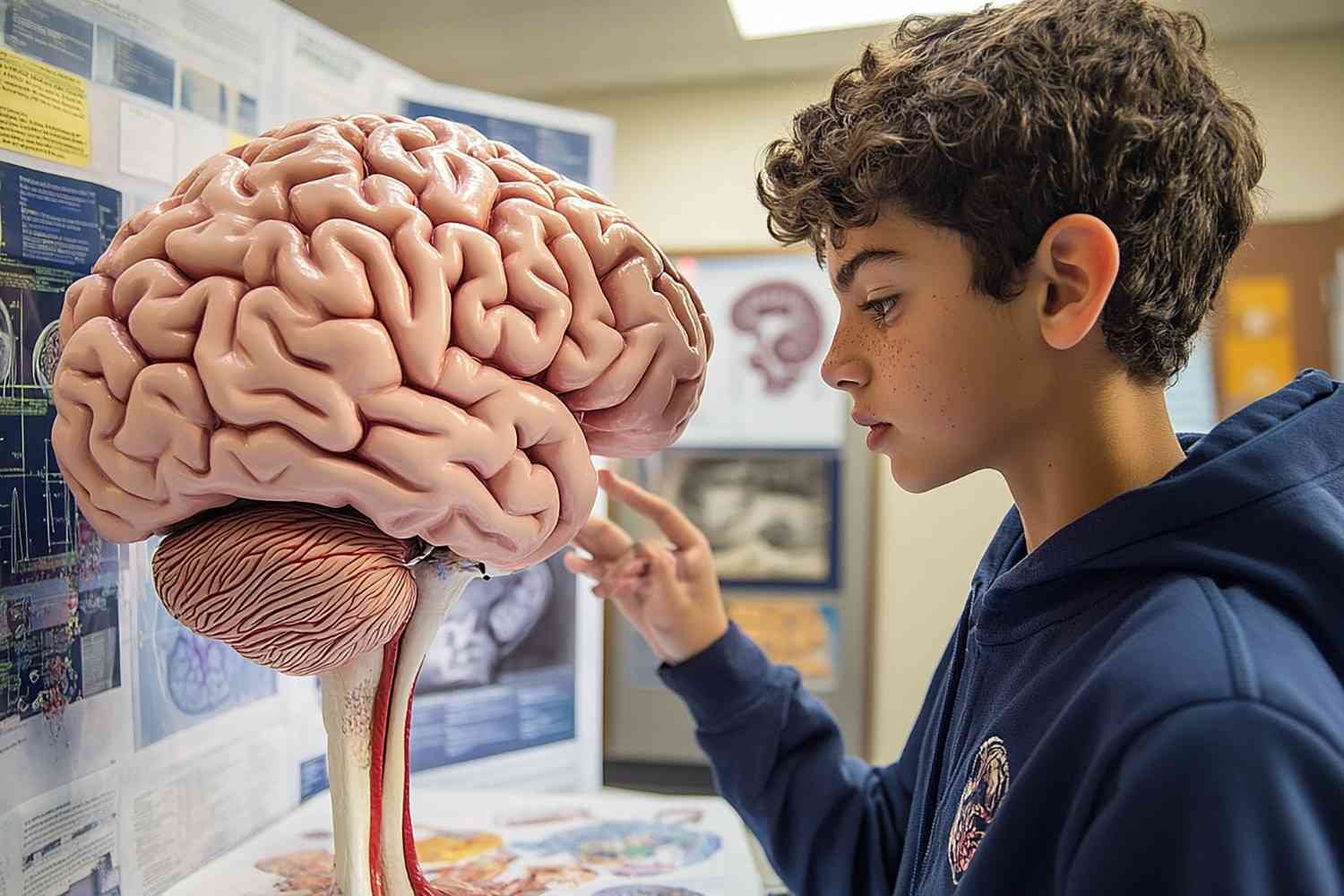
SQ3R is one of the most practical textbook reading strategies because it forces me to interact with the material.
The five stages are Survey, Question, Read, Recite, and Review.
I first survey the chapter. Then I turn each major heading into a question. If a history section says “Causes of the 1929 Market Crash,” I might ask, “What factors contributed to the market crash?”
I then read that section specifically to answer the question.
When I finish, I look away from the textbook and recite the answer in my own words. If I cannot explain it without checking the page, I know I need another pass.
Finally, I review my questions after completing the chapter. This turns the textbook itself into a set of active recall prompts.
How Can I Break a 40- or 60-Page Chapter Into Manageable Sections?
Long chapters become easier when I stop thinking about them as a single assignment.
A 60-page chapter might contain four or five major ideas. I divide the reading at natural headings instead of focusing only on page numbers. If necessary, I spread those sections over two or three days.
Page counts can still help with planning. For example, four 15-page sessions may be reasonable, but I prefer ending a session at a logical section boundary rather than stopping in the middle of a concept.
This information chunking reduces cognitive fatigue and also creates opportunities for spaced repetition.
Should I Read Every Word in a Long Textbook Chapter?
Not every sentence deserves the same amount of attention.
I slow down when I encounter definitions, formulas, important arguments, processes, diagrams, examples my professor emphasized, or concepts connected to course learning objectives.
I move more quickly through explanations of ideas I already understand.
Opening and closing paragraphs of textbook sections often introduce or summarize key points, so I pay close attention to them. However, I do not rely on an overly rigid “80/20 rule.” Important evidence, formulas, definitions, and examples may appear anywhere in the section.
Selective deep reading works better than either skimming everything or studying every sentence with equal intensity.
How Can I Take Better Notes Without Rewriting the Textbook?

One of my favorite techniques is what I call the blind note rule.
Instead of staring at the page while copying information, I read a short section and then cover or close the textbook. I write one or two sentences explaining what I remember.
This forces active recall.
If I cannot summarize the section without looking back, I have immediately identified a weak area.
I also avoid turning my notes into a second textbook. I focus on core concepts, definitions, processes, formulas, relationships, and questions I still need to answer.
This is especially useful when preparing for midterms and finals because concise notes are easier to review than several pages of copied text.
How Can I Replace Highlighting With Active Recall?
Highlighting can help when I use it selectively, but highlighting alone does not tell me whether I actually understand something.
Instead, I create marginal questions.
If I mark an important paragraph, I write a question beside it that the paragraph answers. Later, I cover the text and use that question to test myself.
This turns textbook annotation into retrieval practice.
It also prevents the common problem of highlighting half the page and then assuming that I have learned it simply because it looks familiar.
How Can the Feynman Technique Help With Difficult Chapters?
When a section feels highly technical, I use the Feynman Technique.
After reading it, I try to explain the concept aloud as if I were teaching it to someone with no background in the subject.
I remove complicated terminology where possible and use simple language.
Whenever my explanation becomes vague or dependent on jargon, I have found a gap in my understanding. I return to that specific part of the textbook rather than rereading the entire section.
This works particularly well for subjects such as biology, anatomy, physics, economics, law, and other courses where concepts build on one another.
How Should I Study Long Chapters for Different College Subjects?

I change my reading strategy depending on the course.
For biology or anatomy, I pay close attention to processes, terminology, diagrams, and relationships between structures and functions. Redrawing diagrams from memory can be more useful than rereading them.
For math, physics, accounting, and chemistry, I spend less time passively reading worked solutions and more time attempting problems myself.
For history and political science, I focus on timelines, causes, consequences, competing explanations, and relationships between events.
For literature and other humanities subjects, I look for arguments, themes, evidence, interpretations, and connections between ideas.
Using the same study method for every textbook usually wastes time.
How Can I Remember a Chapter Without Reading It Again?
After completing a chapter, I do not immediately reread it from beginning to end. Instead, I close the book and write what I remember on a blank page. I answer my heading-based questions, explain major concepts aloud, and check my answers afterward. This approach is especially useful while studying for calculation-based exams, because it helps me see whether I can recall formulas, steps, and problem-solving methods without relying on the textbook.
Then I review the material again after a gap. This spaced review helps me identify what remains strong and what is starting to fade. I spend most of my next session on the material I could not retrieve rather than reviewing everything equally.
Using study techniques for long textbook chapters this way turns reading into a continuous cycle of retrieval and correction instead of repeated exposure.
What Common Mistakes Make Long Textbook Chapters Harder?
The first mistake I avoid is marathon reading. Trying to complete an enormous chapter in one sitting usually lowers my concentration before I reach the most difficult sections.
Another problem is excessive highlighting. If everything is important, nothing stands out.
I also avoid taking notes while constantly looking at the textbook because that can become copying instead of learning.
Finally, I do not measure success only by pages completed. A more useful question is whether I can explain the important concepts without reopening the book.
Frequently Asked Questions About Long Textbook Chapters
1. How many textbook pages should I study in one session?
There is no universal number. I prefer studying by sections or concepts rather than forcing myself to stop after a certain page count. A focused 10-page section may require more effort than 20 pages of familiar material.
2. How long should studying one textbook chapter take?
It depends on the subject, difficulty, chapter length, and your existing knowledge. A technical STEM chapter can take much longer than a straightforward introductory chapter because it may require problem solving and diagram practice.
3. Is rereading a textbook chapter ever useful?
Rereading can help when it targets a specific confusing section. Repeatedly reading an entire chapter, however, is usually less useful than retrieval practice, self-testing, and reviewing mistakes.
4. What should I do if a chapter is too difficult to understand?
I break it into smaller sections, identify unfamiliar vocabulary, review prerequisite concepts, study diagrams or examples, and explain each part in simple language. If necessary, I use professor office hours, campus tutoring, or course support resources.
Conclusion
Long textbook chapters become much less intimidating when I stop treating reading as a race from the first page to the last. Previewing the structure, using SQ3R, reverse reading, chunking, blind notes, marginal questions, active recall, the Feynman Technique, and spaced review gives every reading session a clear purpose.
The best study techniques for long textbook chapters do more than help me finish a difficult assignment. They help me decide what matters, test whether I actually understand it, and create stronger memories that are easier to retrieve when an exam arrives.
Leave a Reply